
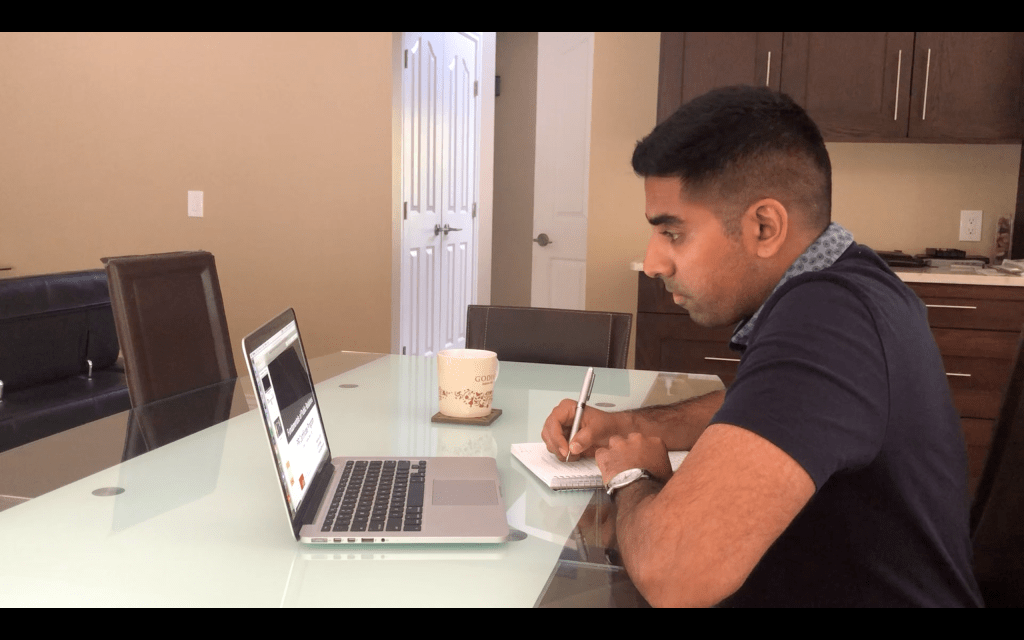
The phrase “you’re never too old” to do whatever is so cliche, but also relatively true. We’ve all heard inspiring stories about famous people getting their big breaks or switching careers later in their lives and everything working out for them because they worked hard and yada yada. But you know what they don’t tell you? How to prepare for the switch and taking care of yourself in between.
For anyone interested, here’s what I learned (so far):
GET YOUR FINANCES IN ORDER
I left my job as a TV news reporter after almost 3.5 years. Before that, I was a Production Coordinator at a VFX studio. Before that, I was freelancing a bit after completing my undergrad. I haven’t been in school in 7 years. Everything was new, including walking away from an income – which didn’t necessarily have to happen, but made sense for my situation. We’re going to be alright.
If you’re going to go back to school for further education on specific skillset, think about where you are at the moment. You might be stuck in a job or career you’re not entirely happy with, having to support yourself and your family. Whatever the case is, if you need to have money coming in, don’t up and leave. Look into flexible online options that you can create a schedule around. Time may be a factor to complete your education. Think about what’s best for your situation.
If you can find a way to make money without having to work, then share that information with me because that is the dream right there. I don’t even know why you’d continue reading this if you found the answer. I don’t mean investing either, I mean straight up cash in my bank account without lifting a finger.
But for real, stay in your financial lane. Prioritize your expenses. Don’t waste your money on stupidity.
CONSIDER YOUR TRANSFERABLE SKILLS
One thing I hear from people considering a career switch is “I just don’t know what I want to do.”
That’s always going to be a tough question to answer. Instead, I suggest asking yourself what you can do. For me, writing and knowledge of the news industry overlapped well with Communications and Public Relations.
Think about the transferable skills you have that are required in other jobs, related or not to your current career. You’d be surprised how much you can use them in different jobs because of how necessary they really are. Technical skills are also a huge asset. The more rounded out you are, the better.
That said, be realistic. If you’re trying to be a doctor, that’s going to require med school. If you have the means and smarts, go for it.
NETWORK WITH PEOPLE IN THE FIELD/INDUSTRY YOU WANT TO BREAK INTO
Whether or not you’re not planning on going to school, or if you have an overlap of skills that are good enough to get you started, you better start getting to know the people who work in the area you want to be in.
These days (covid still), networking can mean Zoom calls, phone calls, emails, or distanced meet-ups. Whatever the case is, don’t be afraid to cold call or send emails to people to pick their brain. I’ve found this to be super helpful because my goal hasn’t been to get a job right away. It’s to learn what I’m getting in to and what is expected of me. Proving myself is how I will get the job. You never know though, because those networking calls can lead to a job, or some sort of opportunity.
Part of the reason I’m in school now is for the networking aspect. Had I stayed in Ontario, I’m fairly confident I would have had a bit of an easier time switching careers faster.
MAINTAIN A GOOD WORK ETHIC
I’m assuming you’re an adult at this point. You get out what you put into it. A poor work ethic results in poor prosperity. Show up, do the work, and commit yourself. If you don’t have the discipline, nothing is going to happen for you.
CREATE A GOOD ROUTINE
Moving across the country and starting fresh gave me a chance to actually start fresh in every aspect. I’ve created a new morning routine, studying routine, and changed up habits altogether. I’m not saying you need a lifestyle change, but a routine will help you establish a rhythm that works for you and helps you adjust. It helps set priorities straight and works hand in hand with a good work ethic.
IN CONCLUSION
Think about what it is you want to do, and write it all out on pen and paper. Sometimes, physically writing things down helps with the thought process. Consider what is at stake if you switch careers, what you’re giving up, what you’re getting out of it, what opportunities there are for you, and decide if it’s worth it. Don’t rush about it either. That never helps anything. Take your time, and set your priorities straight.
Good luck!
 zaynj.ca
Great advice!
LikeLike